
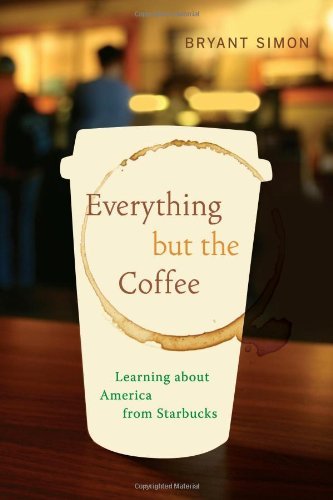
 When is a cup of coffee more than just a cheap, quick pick-me-up? Pretty much always, if you’re the type of person who pays attention to where his food comes from and where it’s purchased — and if you are that kind of person, you’ll want to pick up a copy of Bryant Simon’s Everything But the Coffee: Learning About America From Starbucks, a thoughtful look at the Starbucks craze, its psychological roots, and what left the once seemingly unstoppable chain so vulnerable to the reversal of fortune that has led to the shuttering of hundreds of stores (and thousands of jobs).
It’s a huge topic, obviously, and one rendered even more unwieldy by Starbucks’ expansion into its many non-coffee enterprises; as Simon makes clear early on, Starbucks was selling a lifestyle from its earliest days, but by the time the company purchased Hear Music and started actively promoting Paul McCartney and James Taylor CDs, the store’s brew was just another part of the overall experience.
That was the root of Starbucks’ problem — which you knew already, and if that’s all Simon had to say, Everything But the Coffee wouldn’t have much value; people have been untangling the roots of Starbucks’ stumble from the moment the company’s fortunes started to fade. What makes the book worth reading is the way Simon uses its slim length (320 pages, including an afterword and an index) to tie Starbucks’ dominance into a larger framework: the fraying of traditional social networks, the erosion of various social safety nets, and a growing American thirst — not for coffee per se, but for things that make them feel good and honest and tied into real tradition.
Simon correctly identifies Starbucks as savvy fakers in this area — something that won’t come as a surprise to most consumers, many of whom purchase with an overall distrust of any promises brands make, but it’s nonetheless fascinating to read just how fine-tuned the company’s quest for “authenticity” really is, right down to the placement of those big purple overstuffed chairs and the art on the walls. I doubt there are many Starbucks shoppers who don’t know, on some level, that the softly played jazz and natural earth tones in the stores are part of a marketing game, and Simon is gentle but firm in his insistence that the store couldn’t have succeeded without a happily complacent consumer base. The book isn’t really an indictment so much as it is a lamentation — of what we’ve lost, and of the misguided ways we try to get it back. It’ll only take you a few days to read Everything but the Coffee, but once you’re done, you may not look at coffee — or at anything you buy — the same way again.


Comments