
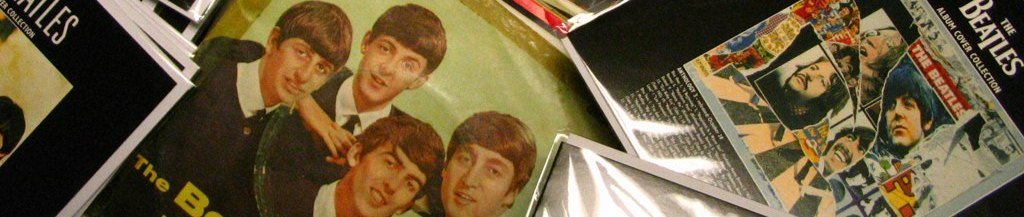
Beatles drummer Ringo Starr has taken his share of knocks over the years. Some of those, in the interest of full disclosure, came from us. Then there was legendary jazz figure Buddy Rich’s blunt assessment: “Ringo Starr was adequate. No more than that.”
Still, it wasn’t like he didn’t have his moments — often curiously effective moments, but moments nonetheless. As former bandmate John Lennon told Playboy in one of his final interviews: “He’s not technically good, but I think Ringo’s drumming is underrated the same way Paul’s bass-playing is underrated.”
In keeping, SomethingElseReviews.com would like to give Starr (nee Richard Starkey) his due. Here are five Beatles tracks where Starr really stood out … but, in a good way …
“TOMORROW NEVER KNOWS” (REVOLVER, 1966): Though this song was uniquely Lennon’s, emerging from an acid-addled subconscious, Ringo Starr made two odd-ball, though very important contributions.
The title was a malaprop that Starr was fond of using, and he also fashioned this unusual, lopsided beat that we believe was invented just for this number.
Both matched the mood of the moment perfectly.
There was considerable thought put into getting just the right sound out of Ringo’s kit. His tom skins were reportedly slacked, and then the track was heavily compressed, using Fairchild 660 valve limiters and compressors according to engineer Geoff Emerick.
Combine that with the exotic tack taken by Starr — something in full accord with the whole Eastern-influenced full-on psychedelia Lennon was aiming for — and “Tomorrow” gains a hypnotic character that entrances even amidst all the tape loops and other various effects tossed ad hoc into the recording.
As hard as it must have been to do at the time, Ringo read Lennon’s mind perfectly.
2. “I FEEL FINE” (single, 1964): Ringo pulls off a cymbal/tom-toms R&B shuffle with the proficiency of Joe Chambers. In fact, you could have transferred this drum track onto any number of Blue Note soul-jazz dates of that time and it would have fit right in.
This inate ability to swing was what initially earned Ringo a spot with the band.
“The drumming,” Beatle bandmate Paul McCartney said in the book “Many Years From Now,” “is basically what we used to think of as ‘What’d I Say’ drumming. There was a style of drumming on ‘What’d I Say’ which is a sort of Latin R&B that Ray Charles‘ drummer Milt Turner played on the original record and we used to love it. One of the big clinching factors about Ringo as the drummer in the band was that he could really play that so well.”
The Beatles then added a country-ish guitar riff — influenced, fellow Fab George Harrison later recalled, “by a record called ‘Watch Your Step,’ by Bobby Parker” — and a hit song was complete.
3. “RAIN” (B-side to “Paperback Writer” single, 1966): A favorite Beatles deep cut for many, but not necessarily for us — though we can’t precisely explain why.
There is, after all, a lot we like about this tune: the sparkling, jangly guitars, McCartney’s grooving bass brought up front and acting almost as a third guitar, and the drums. More to the point, Starr’s drum breaks.
“I think it was the first time I used this trick of starting a break by hitting the hi-hat first instead of going directly to a drum off the hi-hat,” Starr once said, calling “Rain” his favorite Beatles performance.
Continuing through a period of intense studio experimentation, the Beatles reportedly recorded the original rhythm track for “Rain” at a fast tempo, then slowed the tape down to get the desired effect — “a big ominous noise,” McCartney later said.
John Lennon‘s drawn-out vocals, at times, threaten to drag the song down to a crawl, but Ringo’s rousing rat-a-tat keeps pulling the song out of the rut.
4. “TICKET TO RIDE” (HELP, 1965): “Ticket” is itself a fun ride, beginning with a thundering beat that, in a clever move, actually speeds up just before the fade. John liked to call it “one of the earliest heavy-metal records.”
It’s also one of those examples where Starr’s drumming would sound like an amateur taking ill-advised chances — until you consider the context. Ringo once said he plays to the vocals, and no where is that more evident.
Throughout, Starr is in almost telepathic sync with the heartbreak theme, and follows Lennon stride for stride into a more strident cadence for the bridge. The rolling fills in between the chorus and verse add some flair, too.
Good musicians are good listeners, and Starr listened well on “Ticket To Ride.”
“Ringo is the leader in the education for all young drummers of style over flash,” Police drummer Stewart Copeland once said, “always playing the right things rather than a lot of things.”
In retrospect, this beat — perhaps best described as falling-down-the-stairs — was also a kind of preview of what he uncorked for “Tomorrow Never Knows.”
5. “A DAY IN THE LIFE” (SGT. PEPPER’S LONELY HEARTS CLUB BAND, 1967): Arguably the first prog-rock song, it continues to rack up accolades both for main composer Lennon and for its brilliant arrangement. (A recent Rolling Stone list, in fact, declared “Day” the best Beatles song ever.) But this was a Starr masterpiece, too.
Listen closely to his drums and how he works the timbres and shadings.
“The drum fills on ‘A Day In The Life’ are very complex things,” Genesis drummer Phil Collins said in a 1992 interview. “You could take a great drummer today and say, ‘I want it like that.’ They wouldn’t know what to do.”
The distant thunder effect Ringo gets from them, especially in the final verses, complements Lennon’s heavily reverbed voice to perfection. Starr manipulates the tonality of his kit with the finesse of a tympani player.
On that one day in 1967, Ringo Starr was a better drummer than Ginger Baker.
ALSO CONSIDERED: “I’m Down,” where the Beatles risked skidding out of control, if not for Starr’s steady hand; “Glass Onion,” as Ringo gallops along merrily; “In My Life” for the nifty, gentle hi-hat/snare funk rhythm; “Something,” a subtle delight; “Sgt. Pepper Pepper’s Lonely Hearts Club Band (reprise),” which descends with a titanic opening beat; “She Said, She Said,” a terrific example of his straight-ahead rock style; “She Loves You,” with its signature high-hat sizzle; and “Come Together,” where Starr deftly blends his drums with both the vocals (“shoo” …) and McCartney’s bass. No one has ever been quite able to replicate that.
NOT CONSIDERED: Starr’s very rudimentary 17-second solo on “The End” from 1969’s Abbey Road; and both “Back in the U.S.S.R” and “Ballad of John and Yoko,” which actually feature McCartney on drums — and make utterly clear the ridiculousness of Lennon’s oft-quoted one-off comment that Ringo was the second-best drummer in the band.
 Continue reading here …
Jon Anderson sorts through the magical lyricism of Yes’ “Roundabout”
A sit down with Muddy Waters guitarist Bob Margolin
Whitesnake’s — yes, Whitesnake’s — great new record
Follow the Something Else! Reviews webzine on Facebook, on Twitter, or on MySpace.


Comments