

For almost 80 years, Kirkus Reviews has served as the industry bible for bookstore buyers, librarians, and ordinary readers alike. Now Popdose joins the Kirkus Book Bloggers Network to explore the best — and sometimes the worst — in pop-culture and celebrity books.
This week, we unleash the THRILL POWER! for all the Anglophiles out there…
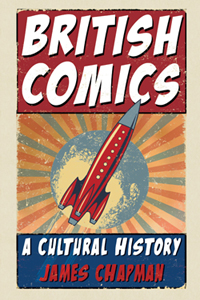
Cartooning is a global medium, and comic books can be — and have been — used to tell just about any kind of story, from kitchen-sink autobiography to sweeping epic fantasy and everything in between. It is a curious anomaly that in the United States, as nowhere else, comics are so thoroughly dominated by (in public perception, if not necessarily in sales figures) by a single genre: the superhero story.
But though superheroes have been the prevalent model of American comics for the last half-century, their nature has changed. Starting in the 1980s, a stream of British comics writers has transformed US comic books. Alan Moore’s Watchmen was a watershed moment in the deconstruction of the superhero, paving the way for Neil Gaiman’s Sandman, Peter Milligan’s X-Statix, Mark Millar’s Ultimates, and revisionist works from Warren Ellis, Alan Grant, Jamie Delano, Garth Ennis, and a host of others — all of whom brought an outsider perspective and sensibility to the genre, and in doing so expanded its parameters
The thematic and stylistic distinctness of UK product, as outlined in James Chapman’s British Comics: A Cultural History (University of Chicago Press), traces back to one of those lovely coincidences of parallel development — where multiple communities, each working in isolation, all arrive at the same destination by different routes. Where mainstream US comics owe much to the lurid pulps that preceded them, the British model grew out of the ha’penny comic papers and ”boy’s own” weeklies of the late Victorian era. In the great boom of British comics publishing, after World War II, the predominant genres were social comedy, science fiction, school stories, sports, and war — with nary a costumed mystery-man in sight.
There was a remarkable difference in tone, as well. There was, for a long time, a paternalistic attitude in British mass media. Remember, this was still a country where broadcasting was considered above all a public trust; and even comics publishers felt an obligation to educate and enlighten, as well as to entertain. Comics like The Eagle and its lead strip Dan Dare: Pilot of the Future were self-conscious celebrations of the British spirit and liberal values, as well as tightly-plotted adventure tales. This high-mindedness is marked contrast to the US crime and horror comics of the same period, the gruesomeness of which sparked a moral panic.
Beginning in the late 1960s, two things happened to change British mass culture in general and British comics in particular. First the BBC monopoly on broadcasting was broken, and the old paternalism began to erode; British media began to adopt the ethos that their American counterparts had long held — Give The People What They Want. And American comics, which had long been scarce across the pond, became readily available in cheap reprint form.
Out of this conflux came a wave of books that beat the Americans at their own game…
Read the rest of this article at Kirkus Reviews!


Comments