

The ’70s and ’80s get a lot of crap for being the era of the faceless corporate rock band, but facelessness has its advantages. For one thing, when even your staunchest fans don’t have any idea what your band looks like, you can hire and fire band members pretty much at will — and even if the music that results from all this shuffling around isn’t any good, the behind-the-scenes drama that erupts between the band, exiled former members, and disgruntled fans is always entertaining enough to make up the difference.
Case in point: Bad Company, the meat-and-potatoes blues rock outfit that gave the world “Feel Like Makin’ Love” — and briefly made mini label moguls out of Led Zeppelin — before evaporating in an early ’80s puff of dwindling sales and good old-fashioned British hatred for one’s bandmates. Naturally, that’s where things started to get really interesting: A few years after being abandoned by vocalist Paul Rodgers, drummer Simon Kirke and guitarist Mick Ralphs decided they wanted to start a new band, but Atlantic Records, spotting an opportunity to create a Toto/Chicago-type franchise, sat on Kirke and Ralphs’ chests and made them hit themselves until they agreed to hire a new singer and call themselves Bad Company. (Rodgers, meanwhile, was off with Jimmy Page in the Firm, another Atlantic act.)
In a stroke of perfect corporate rock synergy, Ralphs and Kirke found their new singer in Brian Howe, whose highest-profile gig to that point had been supplying vocals for Ted Nugent’s Penetrator album. It was sort of brilliant, at least in theory: Longtime fans would buy their new album because it said “Bad Company” on the cover, and rock radio listeners would request their songs because they thought they were listening to the Nuge. Or that Ted Nugent had joined Bad Company. Whatever — the point is, it made perfect business sense, and so did hiring Foreigner producer Keith Olsen to man the boards for their reunion album, Fame and Fortune.
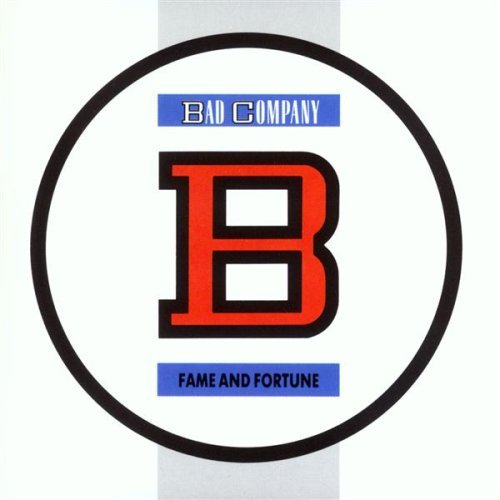 It should not surprise you — at least, not as much as it surprised the Bad Company fans who bought it — to learn that Fame and Fortune sounded an awful lot like a Foreigner record, complete with plinky synths, inappropriate sax, and a singer who sounded like a helium-addicted Dan Hill. It should have been a hit, in other words, and yet it wasn’t — so the band ditched Olsen, as well as most of the keyboards, for 1988’s Dangerous Age, turning instead to Terry Thomas, a man whose name should produce an involuntary shudder of revulsion in anyone who listened to a lot of rock radio in the late ’80s and early ’90s.
Prior to producing Dangerous Age, Thomas had been the lead singer and guitarist for Charlie, a little-known British rock band, and his focus on those two instruments was immediately apparent to anyone who listened to more than a few minutes of his work behind the boards. To his credit, he knew how to make guitars sound good during a time when guys like Keith Olsen were doing their best to turn rock & roll into a wet, muffled mess, but he also never met a rhythm section he couldn’t completely ignore. All loud guitars, gang vocals, and tinny bottom ends, Thomas’ production was perfect for the era — as was his songwriting technique, which essentially consisted of dropping four on the floor, coming up with a big, instantly memorable hook, and adding lyrics about rebellious dudes and the pretty little sluts who love them. It looks awful on paper, and it was, but in the context of what was popular at the time, it wasn’t all that bad, which is why, after Dangerous Age, Thomas became one of the most in-demand producers in the genre, working with Foreigner, Giant, Tesla, and Richard Marx.
Thomas also found a kindred soul in Brian Howe, sparking a songwriting partnership that would dominate the three albums Thomas produced for the band. This was fortunate for Howe, who was already so hated by Kirke and Ralphs that they refused to travel with him during the Dangerous Age tour, but it was deeply frustrating for fans of the old Bad Company. The band’s early records might have been dumb as dirt, but they had a sly sense of humor that helped make up for it; in contrast, the Howe-led model was all sleek efficiency, exemplified by Howe himself, who always sounded like he was a few moments away from pinching a loaf. Still, Age left room for Ralphs to peel off plenty of good ‘n’ loud licks, sending a few cuts to the upper reaches of AOR playlists, and the stage was set for Holy Water.
 So here’s what you need to know about 1990, if you weren’t there to experience it for yourself: Despite what bitter, aging heshers might tell you, it was a pretty bad time for rock & roll — but it was a really, really great time for stuff that kinda sounded sort of like rock music. It was the peak of the maddeningly mannered, meticulously coifed clichÁ© merchants against whom Nirvana and Pearl Jam would shortly lead their rebellion, and for proof, you need only recall that Jon Bon Jovi had a major hit that year with the Young Guns II soundtrack. Basically, if you could string together a few power chords and come up with a handful of song titles using words like “fearless,” “tough,” “heartbeat,” and “night,” you had a pretty solid shot at selling a million records — which is exactly what Bad Company did with Holy Water, a 53-minute monument to lowest-common-denominator phony rock & roll.
The audio equivalent of a box of cereal whose contents have settled to the bottom of the bag, Holy Water promises 13 tracks but delivers maybe five that are worth anything at all. The rest of the record is made up of stunningly shitty filler tracks with titles like “Fearless,” “Boys Cry Tough,” “With You in a Heartbeat,” and “Dead of the Night” — one awful, soul-deadening rhyme after the next, periodically disrupted with a chorus consisting of the song title shouted repeatedly or a guitar solo. Rinse, repeat.
This was the end of the cassette era, though, and you still could stuff a record with garbage as long as you sprinkled a few solid radio cuts on top — and Holy Water contained some prizewinners. The title track, which leads off the album, struts behind a wall of crunchy Ralphs guitars, and it’s followed immediately by “Walk Through Fire,” which has one of the catchiest, most radio-friendly melodies Howe and Thomas ever put to tape:
[kml_flashembed movie="http://www.youtube.com/v/gdkm0aVIhXU" width="600" height="344" allowfullscreen="true" fvars="fs=1" /]
Holy Water also wins points for giving Kirke something to do besides gasp for air at the bottom of the mix — he wrote and performed the album’s sweet, too-brief acoustic coda, “100 Miles.” But none of these songs have much of anything to do with why the album went platinum. Thomas and Howe knew they could score a couple of rock hits just by putting Bad Company’s name on the album, but in order to really take the band back to the big time, they needed something special.
Yes, friends. A power ballad:
[kml_flashembed movie="http://www.youtube.com/v/-EXh2ZJ9VVY" width="600" height="344" allowfullscreen="true" fvars="fs=1" /]
Once pop stations got their teeth into “If You Needed Somebody,” it was off to the races, and although selling a million records back then wasn’t quite the achievement it is now — hell, Holy Water barely scraped the Top 40 — it was still a rather impressive feat for a band whose original audience had left it for dead a decade previous. Of course, Bad Company’s resurgence was short-lived; by the time they returned with Here Comes Trouble in 1992, radio had altered fundamentally. Trouble still went gold, and the band might have enjoyed a few more years of low-level AOR dominance, but Ralphs and Kirke had finally had enough of Howe — or vice versa — and by the time they released their next studio album, it was three years later and they were on their third lead singer, a Paul Rodgers soundalike named Robert Hart. Also, no one cared.
Hart lasted for two albums, neither of which sold worth a damn and one of which consisted partly of acoustic re-recordings of old songs, and by the end of the ’90s, Bad Company’s original lineup was back together, touring behind one of those “all the hits and a few new songs” compilations we all love so much. But remember what I was saying about entertaining drama? Well, Hart decided not to let a silly thing like being fired keep him from fronting Bad Company, and put together his own version of the band, which is apparently busy touring places lawyers fear to tread. Hart’s website is essentially an HTML middle finger to Rodgers, Kirke, and Ralphs, and contains the following nugget of shiny, unicorn-scented awesomeness:
Since 1992 Bad Company has been fronted by the charismatic, multi talented vocalist / hit songwriter, Robert Hart who modestly refutes his recognition as one of the best rock vocalists of all time.
I can’t decide what I love more — that line, or the fact that Bad Company’s original members had to schedule a reunion concert at a Hard Rock in Florida so they could protect the touring rights to their name (not that it seems to have made a bit of difference). Howe, meanwhile, has been recording on and off since leaving the group, and doubtless touring behind a set list heavy with Bad Company songs he may or may not have been present for (his next album, titled Circus Bar, is scheduled to come out in a few weeks). So Holy Water sucks. A lot. But since it helped lead us to this point, I think it’s time to forgive, don’t you?
![Reblog this post [with Zemanta]](http://img.zemanta.com/reblog_e.png?x-id=3be8f3c0-ed94-4ad4-94b3-87345ee06828)


Comments