White Label Wednesday: Art of Noise, “Close (to the Edit)”

David Medsker June 10, 2009 18

wlw.jpg

Damn, why won’t this car start?

The most amusing thing in retrospect about “Close (to the Edit),” and Who’s Afraid of the Art of Noise? (1984), the album that spawned it, is that the first kids in my hometown that gravitated to the Art of Noise were the breakdancers. Their music didn’t quite gel with Mantronix, or Newcleus, or the other electro-funk stuff they were blasting out of their boom boxes – even funnier is the fact that many people just assumed that the Art of Noise were black, solely because of their affiliation with the electro scene – but a big beat is a big beat, and “Close (to the Edit)” has some seriously big beats. The problem, though, was that once the breakdancers gravitated to the album, it was instantly uncool to like the Art of Noise.

Luckily for me, I was already uncool.
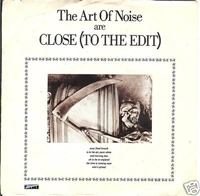
For the life of me, I could not imagine how someone could watch Zbigniew Rybczynski’s eye-popping video for “Close (to the Edit)” and not think that was the coolest song or video ever made. Three guys in business suits bashing the shit out of various instruments to one colossal drum beat (Alan White of Yes, as sampled by Art of Noise founder and producer extraordinaire Trevor Horn), and the main instrumentation consisted of the sound of a car starting at various speeds? (A VW Golf, if Wikipedia is correct) It was a veritable cornucopia of awesomeness! And yet, whenever I sang the song or video’s praises to any of my cooler, macho friends, the response was always the same: “Fag.”

Fuck those guys. “Close (to the Edit)” kills, and has stood the test of time better than whatever dinosaur rock or hair metal they were into at the time. In fact, on the soon-to-be released DVD for “Slaves to the Rhythm,” the 2004 all-star concert for the Prince’s Trust featuring nearly every artist that ever worked with Trevor Horn, one of the evening’s highlights is when Horn, backed by a small army, plays “Close (to the Edit)” live, and rocks the daylights out of that octave-jumping bass line. Fittingly, Alan White played the drums.

Reading the Wikipedia page dedicated to the Art of Noise was quite an eye-opener. I had no idea that there was such acrimony within the band. When I saw that Horn was no longer involved with the band when they released In Visible Silence in 1986, I figured it was a casualty of his ever-increasing profile as a producer. As it turns out, arranger Anne Dudley, keyboardist J.J. Jeczalik and engineer Gary Langan did not like the direction Horn and Paul Morley wanted to take the band – plus Jeczalik thought Morley’s writing was pretentious – so they split from Horn and ZTT Records and went their own way. The bad blood seemingly persists, as Jeczalik and Langan did not participate in the Prince’s Trust show. Dudley did, though, and had the honor of “playing the car,” as it were.

There are roughly six million different mixes of this song, but alas, I only have three of them, plus the album version. The two “Close-Up” mixes have an even bigger drum sound than the original, if that’s possible. Start popping, fuckers!

Art of Noise – Close (to the Edit)
Art of Noise – Close (to the Edit) (Extended)
Art of Noise – Close-Up
Art of Noise – Close-Up (Hop)

  • Malchus

    I never knew that Alan White's drums were the backbone to this song! It makes sense since Horn had been a member of Yes and he co-produced “90125″. I now wonder if the title of this song isn't giving a slight nod to the epic Yes number, “Close to the Edge.”

  • MatthewF

    I always thought that the first Art of Noise record was mostly samples from the Yes album he did.

  • http://www.bullz-eye.com DavidMedsker

    Yep, that's exactly what the title is referencing.

  • http://www.bullz-eye.com DavidMedsker

    Forgot to mention, the “dum” vocal that they sample here is apparently from “Leave It.”

  • Simon Blackadder

    Brilliant! Thanks for posting this. You echo much of what I thought when I began listening to them in '83! No one else seemed to “get” them but the breakdancers (of which I was definitely not one!).

    Thanks again,
    s!

  • Christina Viering

    Interesting.

  • Christina Viering

    Cool!

  • Eddie W

    Always liked both this song and “Beat Box” (and “Leave It” too, by the way).

    I had to go on a hunt years ago for a CD version (to replace my old cassette) of the “blue cover” Best of album because it was out of print and the in-print one (with a pink cover) didn't include “Close (to the Edit)” like the blue cover one did. Never understood that.

  • http://www.bullz-eye.com DavidMedsker

    Yeah, that blue cover version was hands down the better comp. Not sure what happened there, unless ZTT decided not to allow them to use the songs from that first album.

  • http://www.popdose.com Ted

    These are great! I have the first two versions, but not the other ones. So, thanks for rounding out my collection, David.

  • kingofgrief

    I didn't have the last three! By coincidence, I was browsing a candy store on my lunch break today and heard this song on their satellite radio…sandwiched in between “What You Need” and “Pictures of You”. The station was First Wave, natch.

  • Data

    Maybe depends on who you ask, but I've heard that this was much more the work of J. J. Jeczalik and Greg Langan, than it was Trevor Horn. Everybody tends to assume that it was mostly a Horn project, because it was ZTT, and has *that* sound — but that's no surprise, as Langan was Horn's engineer!

    Jeczalik retired from the biz in the late nineties or so. Certainly some bad blood too, though; Jeczalik and Langan at one time considered that AON had been kind of stolen from them.

    I'm pretty sure that Jeczalik is in the Close To The Edit video — I think he's the guy in the white glasses.

  • Data

    Oops, meant *Gary* Langan in that last comment!

  • Data

    Maybe depends on who you ask, but I've heard that this was much more the work of J. J. Jeczalik and Greg Langan, than it was Trevor Horn. Everybody tends to assume that it was mostly a Horn project, because it was ZTT, and has *that* sound — but that's no surprise, as Langan was Horn's engineer!

    Jeczalik retired from the biz in the late nineties or so. Certainly some bad blood too, though; Jeczalik and Langan at one time considered that AON had been kind of stolen from them.

    I'm pretty sure that Jeczalik is in the Close To The Edit video — I think he's the guy in the white glasses.

  • Data

    Oops, meant *Gary* Langan in that last comment!

  • Data

    Maybe depends on who you ask, but I've heard that this was much more the work of J. J. Jeczalik and Greg Langan, than it was Trevor Horn. Everybody tends to assume that it was mostly a Horn project, because it was ZTT, and has *that* sound — but that's no surprise, as Langan was Horn's engineer!

    Jeczalik retired from the biz in the late nineties or so. Certainly some bad blood too, though; Jeczalik and Langan at one time considered that AON had been kind of stolen from them.

    I'm pretty sure that Jeczalik is in the Close To The Edit video — I think he's the guy in the white glasses.

  • Data

    Oops, meant *Gary* Langan in that last comment!

  • Kapitano

    It was this song that made me want to make music. Just hearing it once, sometime in 1985. The sheer audacity of it – rhythm from a starter motor, “verses” that literally went dum-dum-dum, the meandering structure…the idea that you could make a 'song' from whatever sounds were lying around.

    As Anne Dudley once said in interview about hearing the Fairlight for the first time, “Pressing that one key, it was as though the whole world got a bit bigger”.

    But like they said on their “Debusy” album, “An attempt to create beauty is always regarded by some people as a personal attack”.