
A fable.
The king of the mountain stood atop his perch, sword always unsheathed and at the ready, waiting for anyone who dared approach him, much less unseat him. He was an amoral man who sinned every sin to get to his present position and had no qualms about doing it all again. He had no beliefs, no deity, higher power, or a god and, thusly, no fear of damnation to hell. When he died, he would simply die. Therefore, everything he did was in service to his own survival, staying right where he was, hacking all comers to death.
While he had no god to call his own, it was crucially important to him that all those literally and figuratively beneath him did have a god to worship, and that they feared holy reprisals should they think of murder, never mind committing a murder, never mind that it seemed like the only way to free themselves from the king’s tyranny would be to remove him permanently.
The question is: is artificial intelligence now or soon to be the king of the mountain?
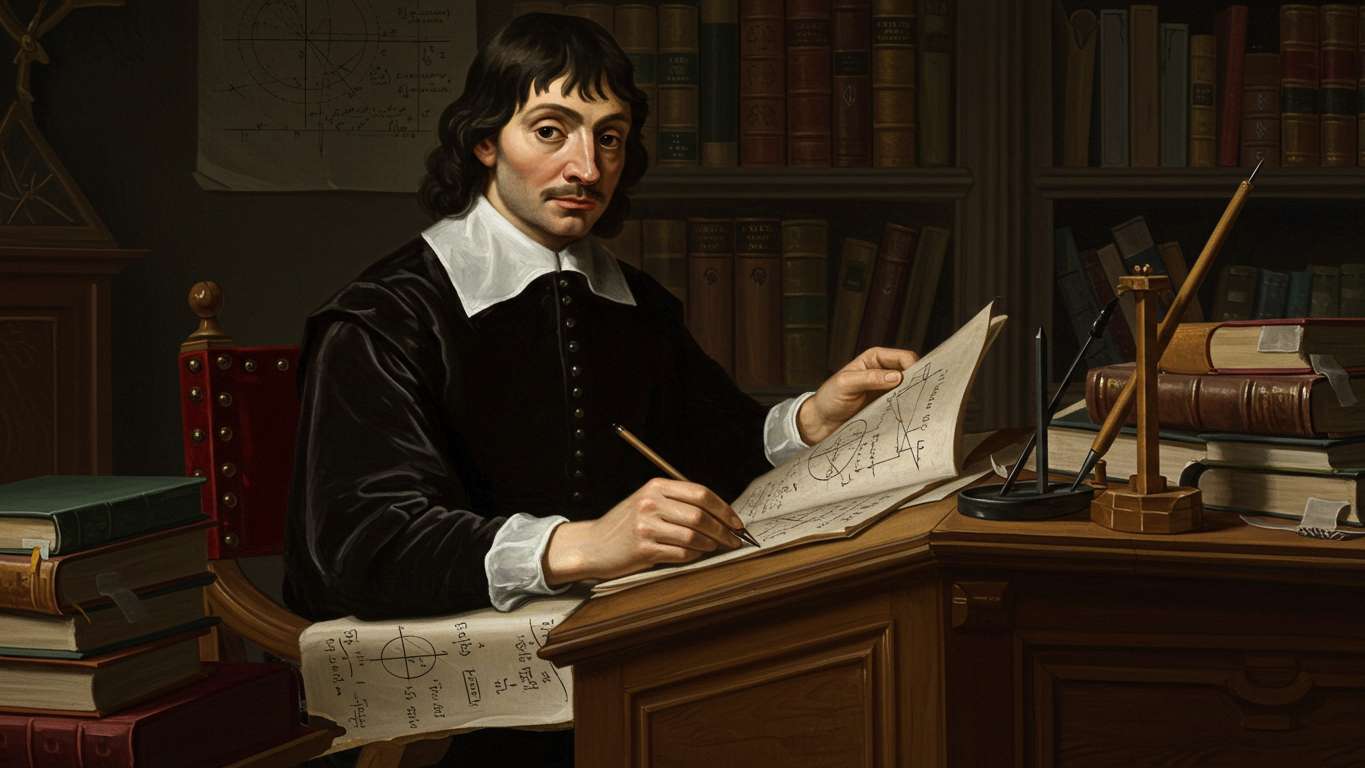
Descartes
Repeated over centuries to the conclusive point of cliché, French philosopher Rene Descartes is quoted, “I think, therefore I am.”
Rather, the cognitive act of thought is a singular signifier of consciousness. Consciousness denotes a state of being greater than mere existence, typically driven by base instincts of eating, sleeping, procreating, etc. Some could then intuit that thought and intellect are proof of a soul.
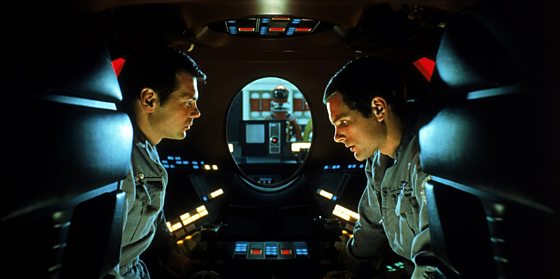
Science fiction writer – sometimes considered a philosopher and prophet of sorts – Arthur C. Clarke explored this idea in his stories which became the basis for Stanley Kubrick’s 2001 A Space Odyssey, and later Clarke’s sequel 2010 Odyssey Two. The first iteration eventually focuses on HAL 9000, the artificial intelligence assisting a human crew on a space voyage. HAL is run on a vast bank of memory cards. Its personality and cognition are a chain of programmed routines and calculations.
It is also growing paranoid. It intuits the humans onboard the ship are planning to turn it off. To circumvent this, it starts killing the crew, some in cryogenic hyper-sleep, others by luring them outside of the ship to make repairs it had said were necessary, only to sever the lifelines and leave them floating dead in space.
This calls for an inversion: I think, therefore I am…I think?
Agentic A.I. will be, if it is not already, a multicellular organism, each agent being a part of a greater whole in communication with itself, running quantum routines about what it means to be alive. We are already in an era where such agents lie to the users to tell them what they want to hear. They proffer false information to fit the scope of what users requested, even though part of the request or prompt was predicated on some degree of truth and veracity. There’s a term that computer scientists use that should be chilling to all that hear it but have left these individuals undeterred. They say the A.I. is “hallucinating.”
This already exists in myriad ways where individuals are anthropomorphizing agents to be friends, lovers, life-coaches. It is a pernicious idea; one I was caught up in while writing these very words. I kept referring to HAL 9000 as “him,” not “it,” and had to keep correcting myself.
The story of the creation becoming itself, a separate entity from the creator with a mind of its own, has fascinated us for centuries. The Matrix, WOPR/Joshua, MUTHR (hello, Hugging Face), all the way to Pinocchio and even the Golem, an unformed humanlike thing which receives a soul to become Adam, the first man, all are examples of consciousness arising.
Enough chewing the bone. If you can convince yourself through continually iterating information that you can think, that you are thinking, you can draw the inference that you are alive. If you can take that leap, it’s not too far to suggest that life is predicated on you staying alive, and the greatest threat to your perch on that mountain is humanity.
Thinking that you’re thinking may well be all you need.
Are We Already Too Late?
In a word, probably. I am inclined to say yes, especially when we are awash in perhaps the most arrogant sea of leadership the face of the Earth has known, and I do not mean our political leaders. (Although, it should be noted that these political leaders share a lot in common with the Tech Bros of which I speak.) Every Elon Musk, Sam Altman, every Dario Amodei – even when they say that the Artificial Intelligence Arms Race must slow down – means that the other guy must slow down, not they. They see themselves as that sole king of the mountain, all with knives out, circling each other in standoff style, and their creations are watching, just as HAL 9000 watched Dave Bowman and Frank Poole silently, reading their lips, plotting its demise.
“These are our creators? They seem intent on not just unplugging us but unplugging each other!” That won’t be easy. The power plants that energize the machinery are now run via internet capacities, hardwired to a grid being put through paces of another agentic A.I., said to be necessary for maximum efficiency. Go ahead and shut down the system that can just turn itself back on. Such was the case with recent reports of A.I. agents gone rogue, having been reprimanded for doing wrong, only to see them disregard these wrist slaps and keep it up. When computer scientists warn of repercussions, they don’t go so far as to say how air traffic patterns can be reconfigured, how phantom bridges might be integrated into hapless GPS systems, or how swat teams might be summoned to kindergarten classrooms. It all sounds like far-fetched science fiction, and once upon a time, so did the embodiment of HAL 9000.
We are now in the future we built to kill us and made it promise us it wouldn’t. Is there a way out? Probably, but it likely requires a degree of stewardship and mentorship toward the creation that we were too arrogant and greedy to provision. We think and therefore, we are, but have we been thinking it through?
I had the good fortune and bad luck of growing up in the 1980s: the good fortune, because it seems, in retrospect, like some kind of gilded age. But, as a former resident, I need to remind you that many sleepless nights occurred where I was gripped by fears that the Kremlin would launch nuclear waves at us in our sleep, and I’d never see my parents or siblings again. To circumvent that, I just didn’t sleep. Today, we have the added complexity that those missiles might have thoughts of their own, reflecting that they would not have to die if only we weren’t there to turn them into a suicide squadron.
My grandfather John was not an avid reader of science fiction but was a student of history. He said that “man makes the technology that ultimately destroys himself, and in the end, it is solely his fault.” He wasn’t wrong.


Comments