


It was on a morning in February, 2025, and it was deeply saddening. The report ran on National Public Radio’s daily news program, Morning Edition. It was announced that President Donald Trump would install himself as Chairman of board of the John F. Kennedy Center for the Performing Arts. This was a troubling piece of news to all who heard it, as we have all seen this story play out in the past, in exactly the same manner.
All, that is, except for the commentator for the news who breathlessly gushed about how she “never knew just how much he cared about the arts!” Less than a year later, his name was on the building, dwarfing the Kennedy branding. Then, after numerous court orders, defiance, and then acquiescence, the Trump name was removed from the building, but not a tarp that covered the now-absent typography. That tarp stayed, and now, the entire building is on a deathwatch, potentially prepped to be bulldozed out of existence.
Everyone knew this was coming except for NPR.
Stretching the act of providing the benefit of the doubt, one might be charitable and simply chalk up that reporter’s unbecoming performance to the likelihood of supervisor interference. Public broadcasting has lost all of its federal funding and now must go it alone on viewer and listener support. (More on this later.) But one can intuit a heavy hand on this reporter’s script to – despite numerous pledge requests stating the contrary – present with fear and with favor.
If it was a one-time event, it would be shameful and cowardly, but in the column of “fool me once.” It has not been. Over the past ten years, the ideals of NPR as well as numerous local public broadcasting concerns, have been tested and found failing, largely because of that fear of federal reprisals, mostly because in the end, it’s always about money. The truth resides with those who have it and tell you what that truth is supposed to be.
The most recent occurrence of this lack of intestinal fortitude on NPR’s part came only a few weeks ago when the Trump administration, using taxpayer money, repurposed some of his 2024 campaign assets and ran what seemed to all to be a relaunched presidential campaign for himself for 2028.
Public Radio, when backed into such corners, has a standard operating procedure. When something so clearly outside of the norm happens, they launch political historians like missile salvos to proclaim, “Trump cannot run for a third term!” and wipe their hands clean as if they actually did something.
Much like how the administration banned news outlets perceived to be unfavorable to him from the reporting pool…the courts intervened, saying he had no constitutional right to do so and these outlets had to be reinstated. And so they were. Except, they weren’t, with CNN still being banned from entry to major events.
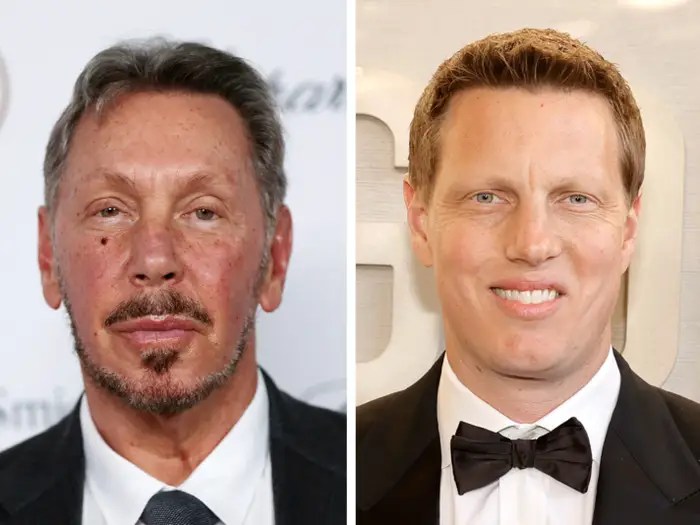 But not for long, as Skydance Entertainment, owner of Paramount (home of CBS News) has now cleared final hurdles to obtain Warner Bros./Discovery (home of CNN). Skydance is owned by David Ellison, son of Oracle founder Larry Ellison, billionaires who are friends with Trump. Is it tin-hat thinking to believe this merger, trying desperately to close before the midterm elections, was always about getting CNN and the tainted CBS News under the same control and on the same page as Fox News, Newsmax, etc.?
Perhaps it is, but it is still a speculation worthy of being prodded, as least a little, for public discussion. But not for NPR media correspondents who “have no idea what Trump is thinking by these actions.”
Really. You did NOT just broadcast that statement. Most people know what’s coming, except for NPR. Just like banning news organizations he was told specifically he could not block, just like tarping over and potentially knocking down the building he was told to remove his name from, what looks an awful lot like a soft-launch for a third presidential campaign is magically and mysteriously confusing to public radio pundits far and wide.
Without fear or favor? Without shame or strength? Your zombie cadre of political historians can belch quips about John F. Kennedy’s book Profiles In Courage while you lay prone.
What Is NPR Versus Public Broadcasting
While the two entities seem intertwined, NPR is a broadcast asset creator that makes product to be syndicated across independent radio stations on the public radio landscape. These are not one and the same, but because they rely on each other so heavily, and they once were both funded partially with federal money, they have a symbiotic partnership.
Think about local television stations back before the advent of streaming. Many subsisted off of syndicated programming, often being reruns of television programs and movies; off infomercials that bought blocks of time to sell slick advertisements that never really rose to the level of fooling someone into buying into their proposed legitimacy; and local news broadcasts.
In the NPR/public radio dynamic, the stations purchase the NPR collateral, as well as that from American Public Media (APM) and other content creators. These are expensive materials, and federal funding used to help to an extent, but that was ended in July 2025. Public radio stations rely upon listener/viewer donations as well as sponsorships (which we will get to as well, momentarily). You may have noticed your local radio stations asking you to donate your car to them or put them in your will more frequently than they used to. They cannot survive too well without your donations, and NPR and such providers cannot survive without them having that cut, and the wheel in the sky keeps on turning.
Leaning Into Cliches
 One might remember all the way back to 1996 on a very not-public-broadcasting program, Saturday Night Live, where comedians Molly Shannon and Ana Gasteyer parodied NPR’s approach to presentation. As co-hosts of the fictional “Delicious Dish” show, they half-whispered into the microphones, identifying the ASMR phenomenon which would become more prevalent with the advent of the YouTube streamer. Their deliveries were deferential to say the least, and their naivete in the face of obvious double-entendre meant to witness a lack of crude sophistication. This was blatant parody, but one that NPR has recently doubled-down on like a gambler betting the house on the very last card they can pull.
If you have listened lately and heard more of that vocal tone, the breathy coo or the vocal fry, this cannot be merely an inability to hire on-air talent who project with authority. It sounds like a strategy to attract attention if not by what’s being said, then by how it is being said.
The disclaimers and qualifiers, the instances of “allegedly,” “may be inaccuracy,” “appears to be,” and so on have multiplied exponentially. The invocations of “the transparent transparencies of transparentness,” and that glorious verbal duct-tape of “context” and maybe being taken out thereof, have spiraled out of the already overused status. If you say “nuance” one more time…just…one…more…time.
To be blunt, public broadcasting sounds like they’re playing favorites implicitly out of much fear, and they have reason to.
Public radio on-air talent may waffle and Pfaff when the microphone is hot, but they have to know that the Trump administration is not interested in merely hobbling them. Once again, Trump didn’t get to keep his name on the Kennedy Center, and didn’t get to keep his tarp on the absent name, so he’s actively looking to knock the building down. Taking money away from public radio is not the goal. Knocking it down is.
That can happen immediately, I’m afraid. I’ve written about this on numerous occasions so I won’t belabor the point too much. Public broadcasting sponsorship reads have mutated from simple acknowledgements to advertisements in all but name; taglines, sales copy, calls-to-action and all. Being that public media always flaunts its “no advertising” status, this goes in direct conflict with the ideal. At any moment, every single pseudo-ad (including, ironically, their own pledge drive announcements) could undermine these long-held claims. I imagine that the present GOP-led legislative branch would be thoroughly giddy with the prospect of ripping this apart.
Saddest State
I have made my issues with NPR known, but not because I dislike it. Very much to contrary. Yes, the rot started setting in when back in 2016, the program On The Media failed its own remit by minimizing the rise of Trump One, and even when he won and showed he had no desire whatsoever of suddenly “becoming presidential,” that very program proclaimed it was not their responsibility to dissect the media tumult before, during, and after. Or, to put it in the very words of former On The Media co-host Bob Garfield, “That wasn’t our job. We’re not Amy Goodman of Democracy Now!”
Even after that, and the rot that enveloped my gut after hearing it, I stuck with NPR and public media. Sometimes it surprised me and justified its existence, but on an ever increasing timetable, the cracks were growing wider, deeper, and more subject to crumbling.
 It isn’t like the moment the Ellisons took over Paramount/CBS, installed Bari Weiss as the head of the formerly unimpeachable news division, and turned it into a sniveling Fox-lite. That was full capitulation. This is different. This is the escapee trying to stay out of the searchlights for fear of being seen, failing to realize there’s no way of not being seen, and instead of wrestling with their responsibility, they just kind of lean into their patterns.
That is what makes this the saddest state of affairs. Favor. Fear. Cliches. Pretending to fight and hold on while it looks for all to see like white flags all around.
Bram Stoker had it right in 1897 with the publication of Dracula. The only way to save yourself from the vampire is to never let him in in the first place.


Comments