

A good “Easter egg”, like pornography, is hard to define, but we know it when we see it. Some of these extras for fans are basically trivia, some are namechecks from another work, and others are more complex callbacks.
The best ones have a “Whoa” or “Holy Shit” component to them. The good ones are private jokes between the creator and their core fans. The great ones tell you something more about the work, no matter the medium.
We are in a golden age of Easter eggs. Not Disney animators sneaking in a prurient image in a frame of an animated movie; more like bonus content. There are so many great extras for modern artistic achievements – there are accompanying podcasts to a lot of media, DVD extras, online special content, interviews and outtakes intentionally leaking online, bonus websites – this is the era where if a creator has an extra idea that didn’t quite make the final cut, it can always live online and get found.
More importantly, things are rewatched, restreamed, and zoomed in on now to an extent that 1990s filmmakers, writers and TV producers never could have dreamed of. Let’s look at some of these favorite nested references of beloved works of fiction.
Music
Of course, we have to take a nod to classic albums backwards tracks like the “I bury Paul” nonsense at the trippy end of “Strawberry Fields Forever”; shouldn’t be that surprising from a playful and clever group like The Beatles.
Speaking of which, Barclay James Harvest song “Titles” is just a list of Beatles song titles arranged to be almost an understandable narrative. Is this an Easter Egg? Maybe not, but it’s clever as fuck:
Not to be outdone with a backwards track, Pink Floyd spent hundreds of thousands of dollars in the studio making The Wall and loaded up so many sonic treats. But the backwards message in “Empty Spaces” is pretty damn strong:
But when it comes to consistent musical Easter eggs, I’ve gotta hand it to Sting. Look at this list of lyrical nods:
- Sting “Love Is the Seventh Wave” has “Every Breath You Take” parody lines like “Every cake you bake, every leg you break” at the end.
- “If you want to keep something precious” from “If You Love Somebody Set Them Free” comes back with the single from the next album on “We’ll Be Together.”
- “Do I have to tell the story” and “It’s a big enough umbrella” from The Police’s “Every Little Thing She Does Is Magic” resurfaces on both The Police’s “O My God” and much later on Sting’s sneaky good “Seven Days”.
Film
Not sure if this is just “meta”, an “inside joke” or an Easter egg, but Mike Myers plays a music manager dubious of Queen’s “Bohemian Rhapsody” saying it’s not “the kind of song teenagers can crank up the volume in their car and bang their heads to” when that’s exactly what Myers did in Wayne’s World to reintroduce the song to a mass audience in the early 1990s.
The Coen Brothers and Quentin Tarantino have legit fictional universes over the course of their filmographies.
Tarantino leans into this strongly, particularly with the fake products. Red Apple Cigarettes apparently appear in NINE of his movies, and Big Kahuna Burger is a presence in several movies and not just the slurped soda in Pulp Fiction.
One of the most remarkable blitzkriegs of Easter eggs has to be the endless Coen Brothers references in Noah Hawley’s amazing five seasons of the Fargo TV series.
In one early episode, a sporting-goods store is called Uli’s, after the nihilist from The Big Lebowski; later, Karl Weathers barricades a door with a bench in the exact sort of useless fashion Walter does in The Big Lebowski. There are even musical callbacks: Fargo uses “Just Dropped In,” “O Death” and “Danny Boy,” all strongly associated with The Big Lebowski, O Brother, Where Art Thou? and Miller’s Crossing, respectively.
In another, a truck bears the name Treehorn, a reference to Jackie Treehorn from The Big Lebowski.
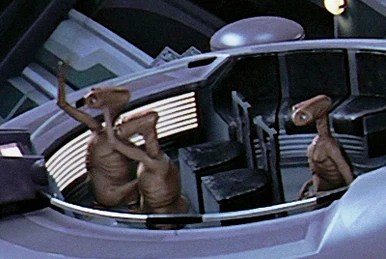
Steven Spielberg and George Lucas were friends and collaborators who played a fun game of trading Easter eggs. R2-D2 and C-3PO are hidden in hieroglyphics in Raiders of the Lost Ark. There’s a costumed Yoda in ET, while in The Phantom Menace the galactic senate features a delegation from a planet of ETs.
If DVD extras count in what we’re doing, the funniest to me is what happens if you select the Hebrew language option on the Borat DVD. Get ready for “You have been trapped, Jew!”
TV
We gotta give some credit to the producers of Lost for being the first hit show that seemed to be having a conversation with the internet. With their understanding of how modern TV was unfolding, they know that people would obsessively rewatch TiVO recordings to try to solve mysteries. “The numbers” are all over the place, you can see Dharma Initiative logos all over the place, and the mindfuck of Season 4’s time travel anomalies is nerd dessert.
With the advent of the internet, novelty fan sites were great bonus content for television networks to augment their shows with and give something to hardcore fans. The Pied Piper website from Silicon Valley had plenty of great nuggets for fans: https://web.archive.org/web/20210725124915/http://www.piedpiper.com/.
But for my money, the Creed’s Thoughts blog from The Office was comedy gold – even just the nutball URL that Ryan set up for Creed to protect web users from whatever Creed wanted to pollute the internet with. It’s like the even more Bizarro version of Larry King’s old USA Today columns: https://creedthoughtsgov.com/.
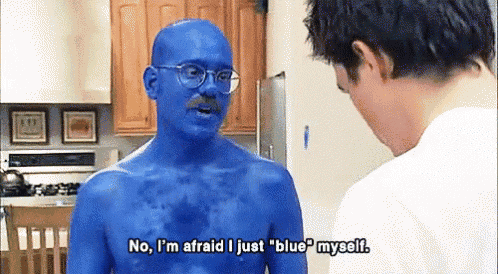
As far as the shows themselves, not extras, two stand out above the rest. In comedy, Arrested Development has so many self-referential running bits, it’s the ultimate rewatchable show. Just think of “Her?”, “I’ve made a huge mistake”, Carl Weathers cheapness, Barry Zuckercorn jumping the shark, “there’s always money in the banana stand”, Ron Howard’s snarky comments about other narrators, there’s almost no end to it. While you’re re-watching, make sure to catch blue smudges everywhere based on Tobias’ understudy stint with the Blue Man Group. Jesus fucking Christ, it’s good.
That’s only matched on the drama side by the huge degree of difficulty for Better Call Saul to retrofit absolutely everything in a prequel show to Breaking Bad which honors every little detail of the original series. Characters, locations, throwaway lines and even tiny pieces of dialogue from Breaking Bad can suddenly take on new meaning when you see where they came from. The BCS writers seemed like they were successfully completing a five-dimensional crossword puzzle.
Books
Books may be the original Easter-egg delivery system, because writers have been sneaking things past readers for a very long time.
Kurt Vonnegut basically built his own little universe without ever bothering to announce it. His recurring science-fiction hack Kilgore Trout pops up in God Bless You, Mr. Rosewater, Slaughterhouse-Five, Breakfast of Champions, Timequake and elsewhere, sometimes as a major character and sometimes as a throwaway.
Stephen King took the same basic idea and amped up the dial to eleven. His books constantly bump into one another, with characters, places and events from one story resurfacing somewhere else. Castle Rock, for instance, becomes a recurring fictional Maine town rather than merely the setting of one novel, while characters and references from The Stand, ‘Salem’s Lot, It, The Dark Tower and other books increasingly make King’s bibliography feel less like a collection of novels than one enormous, freaky neighborhood; Paul Sheldon from Misery grew up in the Derry neighborhood of IT.
And then there’s The Life and Opinions of Tristram Shandy, Gentleman by Laurence Sterne which was screwing around with the rules of fiction in the 18th century, long before anybody had invented the term Easter egg. The book (and the movie adaptation) are as mindfucky as even Charlie Kaufman’s Adaptation.
My favorite, though, may be Vladimir Nabokov’s Pale Fire. The book initially presents itself as a 999-line poem by the fictional John Shade, followed by commentary and an index from his supposedly scholarly editor, Charles Kinbote. Except Kinbote’s “footnotes” gradually take over the book where they dominate the pages with maybe just a couple remaining lines of “text.”
That’s more than an Easter egg. Nabokov essentially hid the novel inside the gimmick. And to think that English was his second language might be the most mind-blowing thing about it.


Comments